What the format stresses
Pick almost any other AI video use case and you can succeed without solving continuity. A campaign asset, an explainer, a music piece - each stands alone, and standing alone is what generation tools are good at.
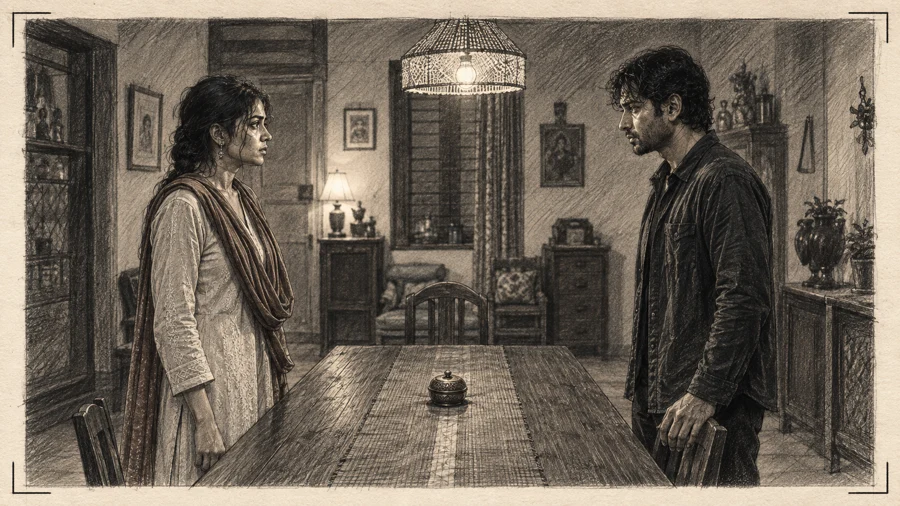
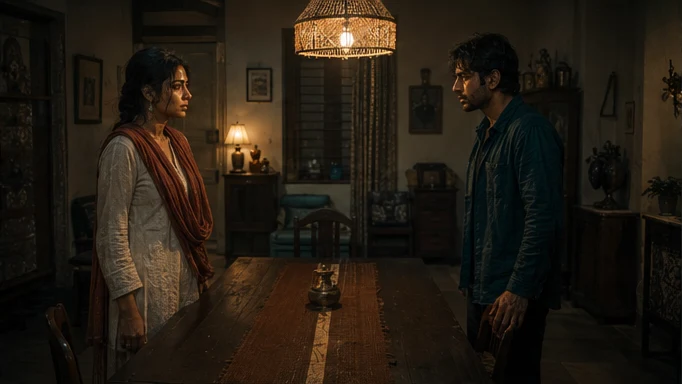
Serialized microdrama removes that escape route. Episodes arrive frequently, the same people have to come back, each one has to end on a question, several languages ship from the same production, and the audience's next-episode behaviour is measurable. Every one of those is a direct test of canon, approvals, tracks, repair and cost.
- Frequent output
- Tests cost per accepted minute and operator time, not peak quality.
- Recurring characters
- Tests whether canon actually holds across hundreds of shots.
- Cliffhangers
- Tests planning: an episode has to stop somewhere specific.
- Multilingual adaptation
- Tests whether tracks are really tracks or quietly separate projects.
- Measurable progression
- Tests whether performance data can inform the next production at all.
The uncontested part
The large horizontal AI video products localise their interfaces into several languages and target none of the Indian-language production market. That is an observation about where their marketing points, not a claim about their capability, and it is not a permanent advantage.
It is, however, the advantage available now, and it comes with a structural one: an Indian company producing in Hindi first is closer to the rights, casting and review realities of this market than a product built elsewhere and pointed here later.
- Hindi as the primary production track, not a localization target
- Pronunciation, register and code-switching as canon rather than vendor notes
- Rights practice shaped by folk, devotional and regional-catalogue realities
- Native review per track as a named approval gate
- An Indian legal entity, and Indian production operations
The numbers we are not quoting
Frequently asked questions
Is Tosheo only for Indian creators?
The launch wedge is Indian-language serialized entertainment and branded stories for Indian brands and agencies. That is where the production, the review capacity and the rights practice are. It is a focus decision rather than a restriction written into the software.
Why not launch globally?
Because a product that launches for six unrelated markets fragments its design, onboarding, sales, success metrics and support before proving one workflow. Broad architecture creates expansion potential; a narrow entry creates a clear buyer and dense learning.
Will you expand to other languages and markets?
A new Production Pack is added only when existing customers repeatedly request it or a committed buyer funds its validation, at least 70% of its workflow reuses the existing core, and its buyer, metric, pricing unit, rights requirements and delivery spec are defined. Those conditions are in the brief precisely to stop us expanding on enthusiasm.
Do you have market data you can share?
Not our own, and we are not going to repackage someone else's as if it were. What we will publish is production evidence from our own demonstration arc: cost per accepted minute, repair examples, continuity results and language-track results.
What if the microdrama market cools?
The architecture is horizontal and the entry is narrow, which is the hedge. The systems being proved here - canon, approvals, rights, tracks, repair, delivery - are not specific to vertical drama, and branded story campaigns are already the second test of exactly that.